
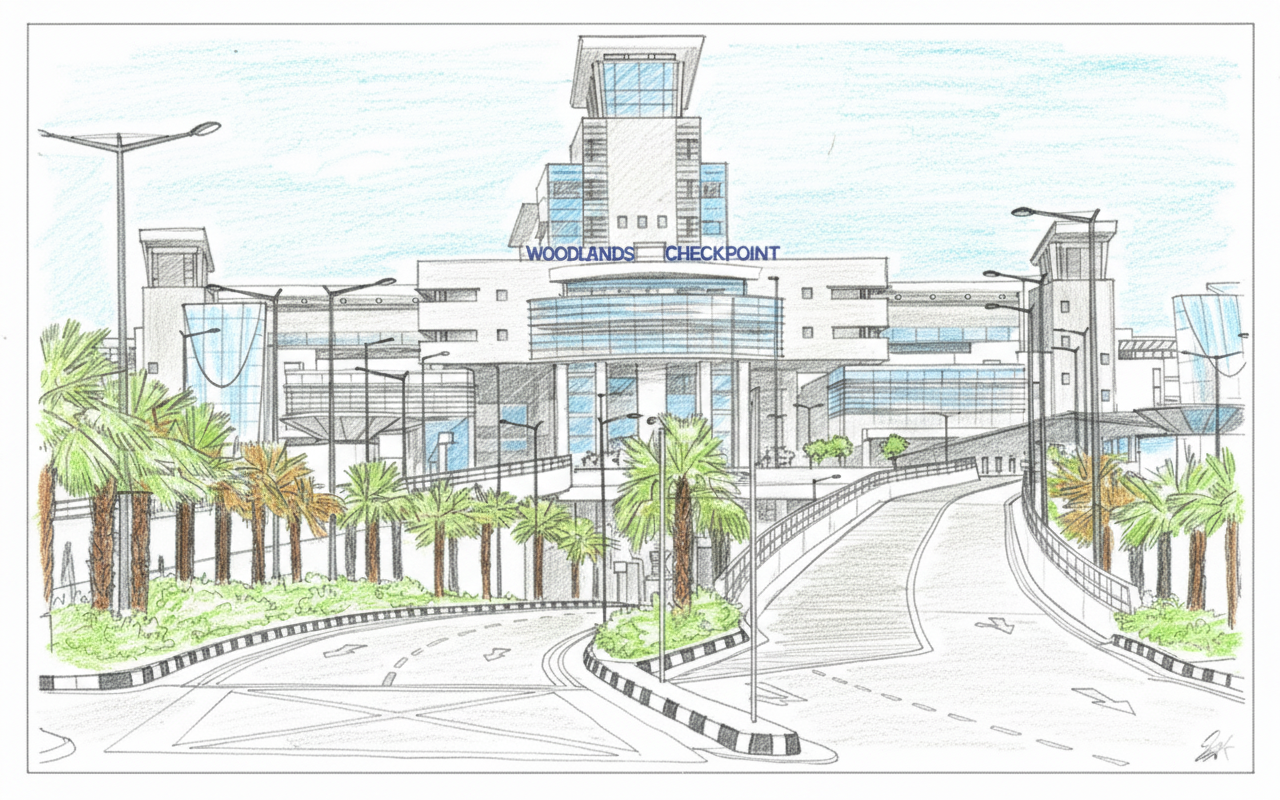
Imagine painting a map of Singapore’s borders, not with ink, but with microbes.
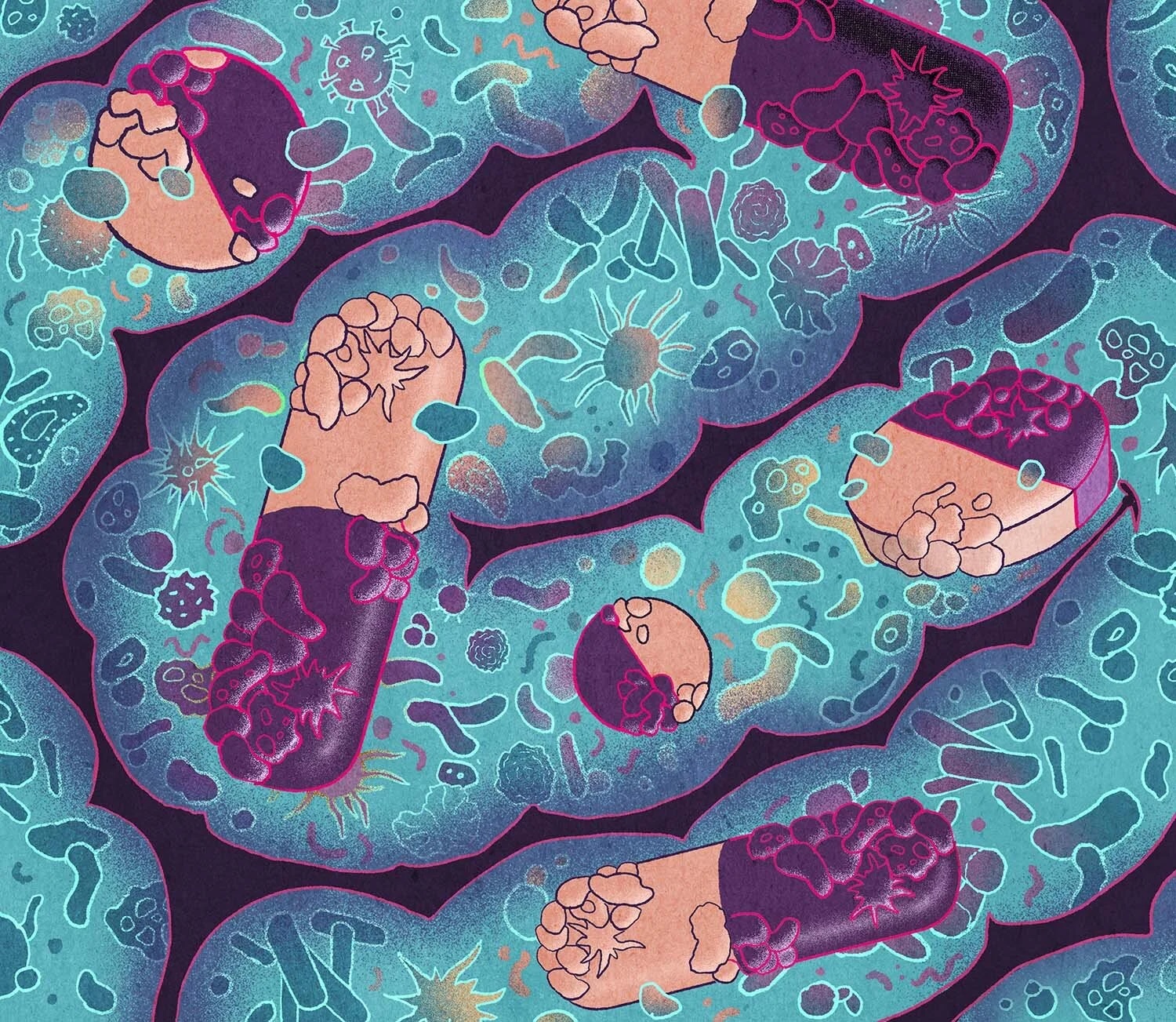
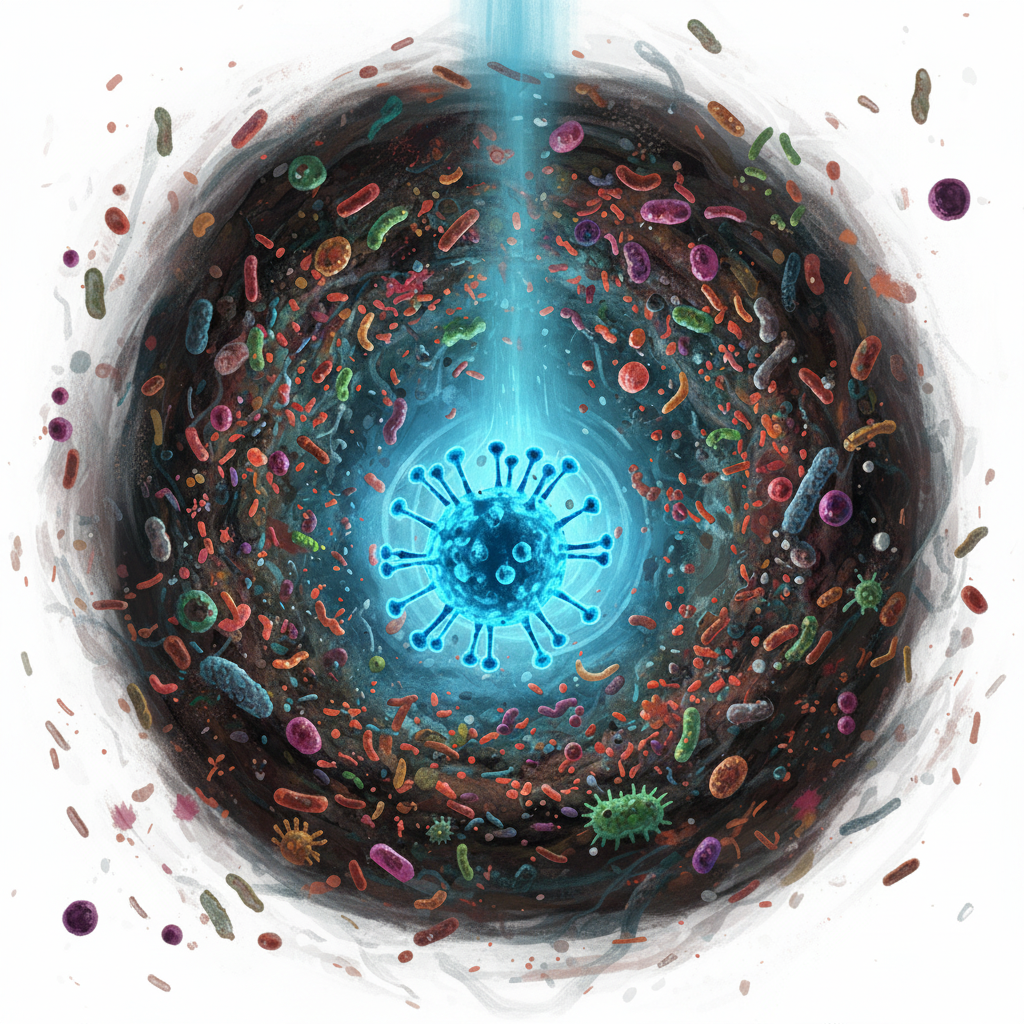
Every counter, railing, and stretch of air carries invisible traces of life, forming microbial reservoirs that reflect the constant movement of people, goods, and vehicles.
Together with HTX (Home Team Science and Technology Agency), we are launching an investigation into these hidden ecosystems. Checkpoints are more than just gateways for travelers; they are rich microbial environments that may hold exciting insights into how microbes move, persist, and adapt in high-traffic spaces.
We are combining modern science with advanced technology:
- Swab sampling of surfaces like counters and walls
- Air sampling using specialized devices
- DNA sequencing (metagenomics) to reveal the full microbial community
While the project is ongoing, the questions driving us are exciting: Do different checkpoints have their own microbial “fingerprints”? How do high-traffic environments shape microbial diversity? And could these invisible communities one day act as early warning signals for public health?
Most of the microbes we expect to find are harmless, but together they create a living layer of information that science can finally start to read.
The journey has just begun, and the microbes are already on the move. Follow us as we trace their hidden paths across Singapore’s borders.
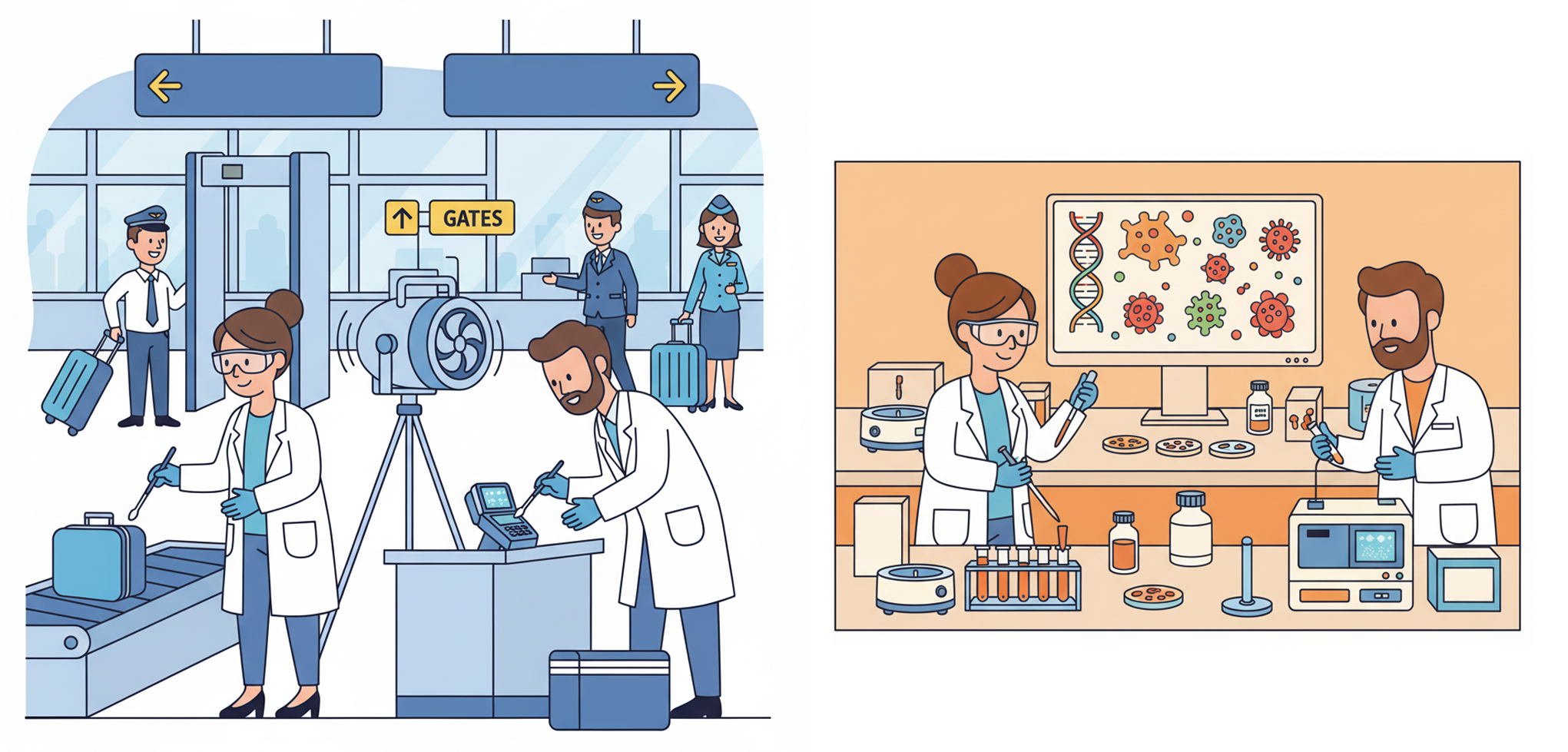 From checkpoint to lab: swabs and air samplers capture invisible life, which is then revealed through DNA sequencing.